
What Is Taj Mahal Quartzite?
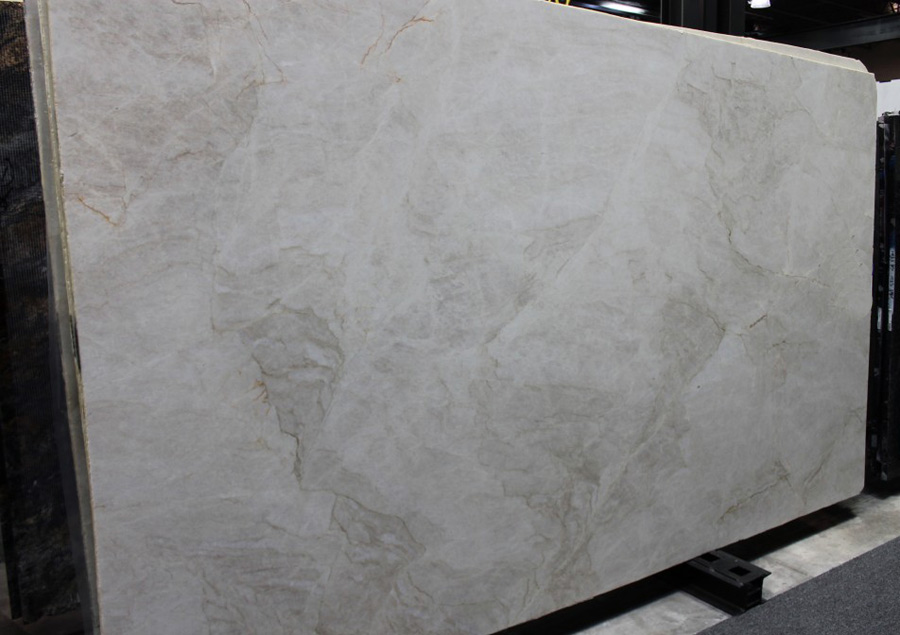
Taj Mahal Quartzite is one of the most recognised Brazilian natural stones in the luxury market. It is known for its creamy background, warm beige tones, golden-brown veining and refined marble-like appearance.
It is widely used for kitchen countertops, islands, bathroom vanities, feature walls, fireplaces, hotel interiors and high-end residential projects. Although often compared with marble, Taj Mahal Quartzite typically offers better durability and is more suitable for daily-use surfaces.
Why It Is So Popular
Interior design has shifted from cold white and grey surfaces toward warmer, softer, more natural materials. Taj Mahal fits this movement perfectly — its warm neutral palette creates a luxurious atmosphere without overpowering the space.
Is It from One Quarry?
"Taj Mahal is better described as a family of aesthetically similar crystalline quartzites quarried in Ceará, Brazil — not a single stone from a single quarry."
According to LitosOnline, around five quarries in Ceará produce materials within this Taj Mahal family, with different exporters using different commercial names for stones that share similar visual characteristics. This is why slabs sold as Taj Mahal can look different supplier to supplier — warmer and more golden, or lighter, greyer, more linear, more cloudy, more crystalline.
These variations do not always mean one slab is authentic and another is not. In many cases they reflect differences in quarry, block, layer, commercial name, supplier selection and batch quality.
The Taj Mahal Family & Similar Names
Several Brazilian quartzites are associated with the Taj Mahal family or compared with it because of similar origin, colour and movement. The names below are commonly discussed by importers, fabricators and project buyers.
Taj Mahal Quartzite (Ceará, Brazil) — the benchmark of the family. Creamy beige ground, warm golden-brown movement, balanced contrast. Premium blocks are quiet, uniform and bookmatch cleanly across large walls and islands.
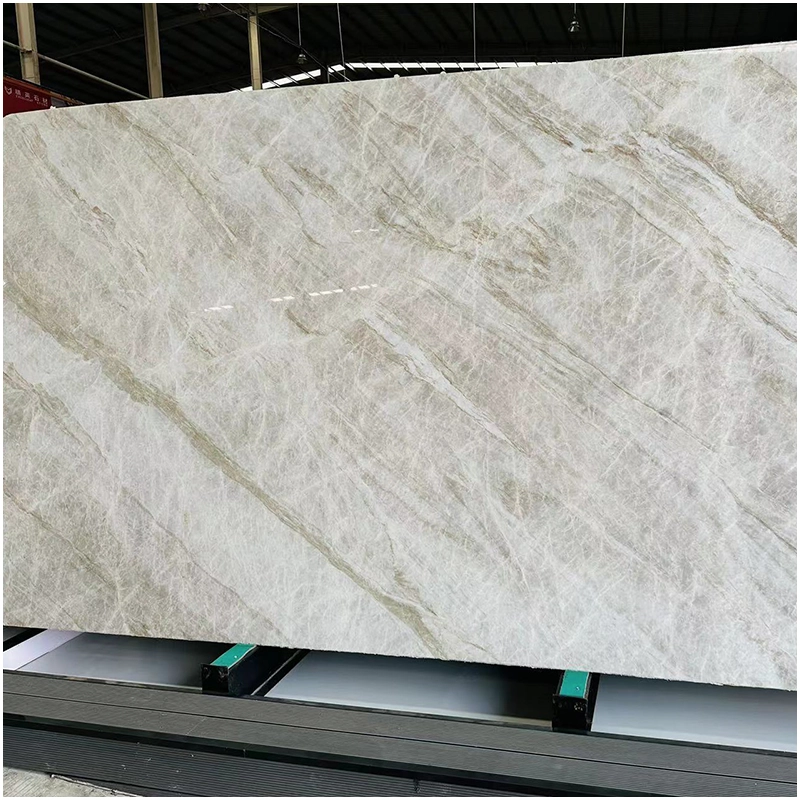
Perla Venata — one of the closest commercial alternatives to Taj Mahal. Typically reads slightly cooler and lighter, with veining that is more dispersed and less directional. Often specified when a project wants the Taj Mahal language at a lower price point or with a calmer overall field.
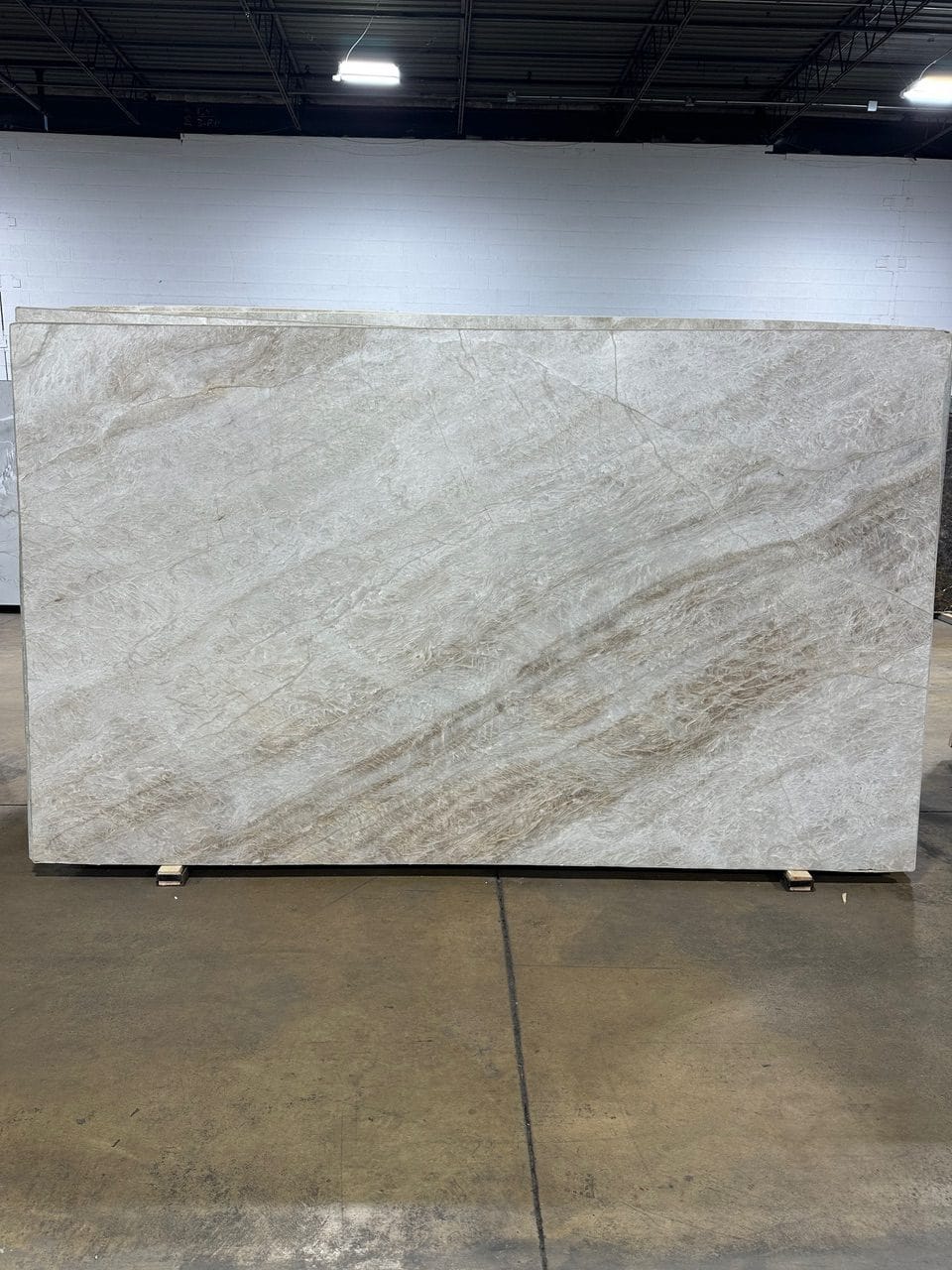
Perla Santana — listed by industry sources as another commercial name within the broader Taj Mahal family. Appearance varies meaningfully by quarry and supplier; always cross-check actual bundle photos and supplier documentation before committing.

Matira — another related name in the family. Movement and colour vary noticeably batch to batch, so slab-by-slab inspection is essential. Useful as a sourcing option when Taj Mahal stocks are tight, provided the project tolerates a wider visual range.
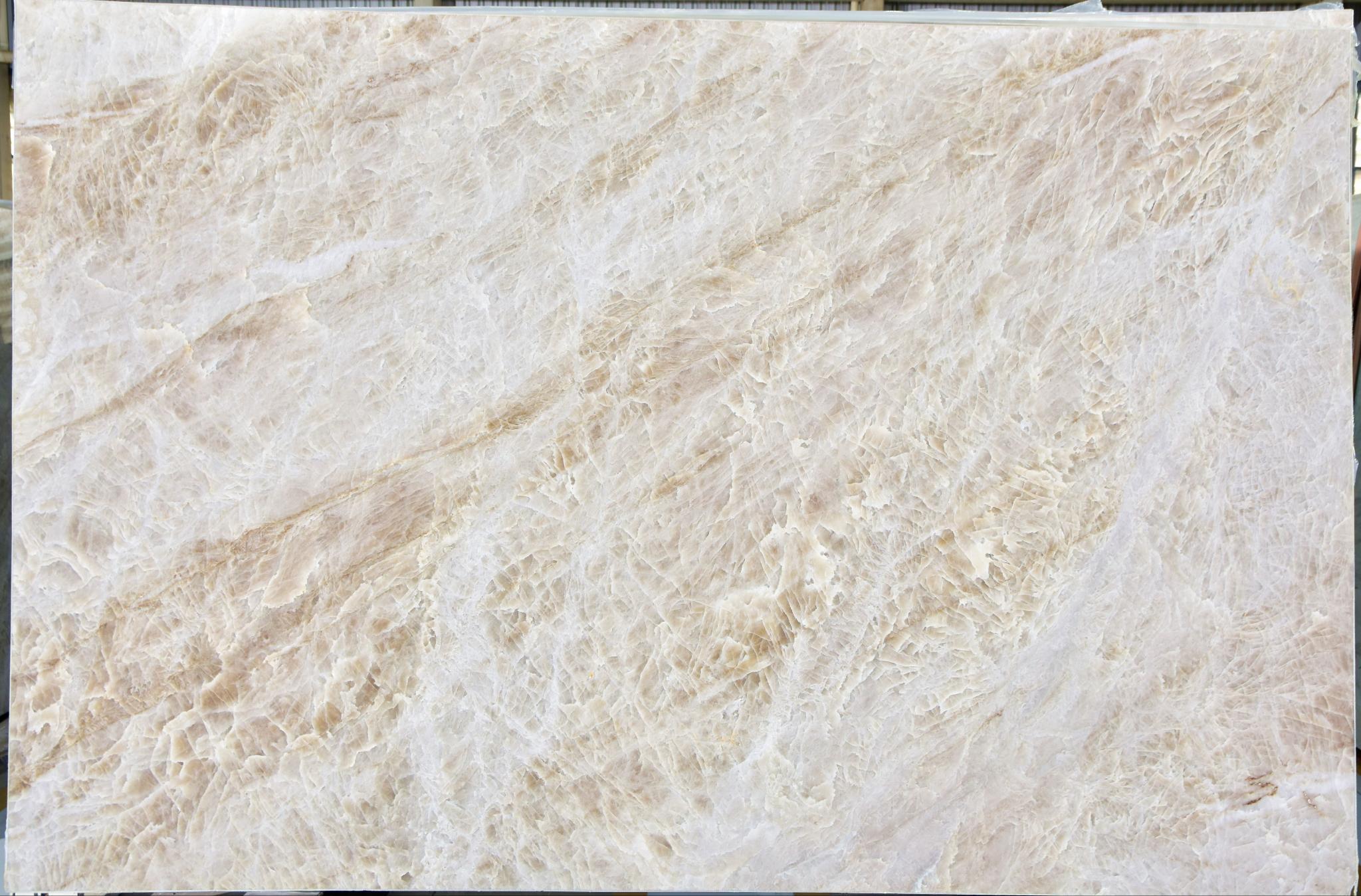
Naica — often described as the cooler-toned sibling of Taj Mahal. The ground is more pearlescent and the veining more delicate, which makes it well suited to lighter palettes and bathrooms where the stone needs to recede rather than lead.
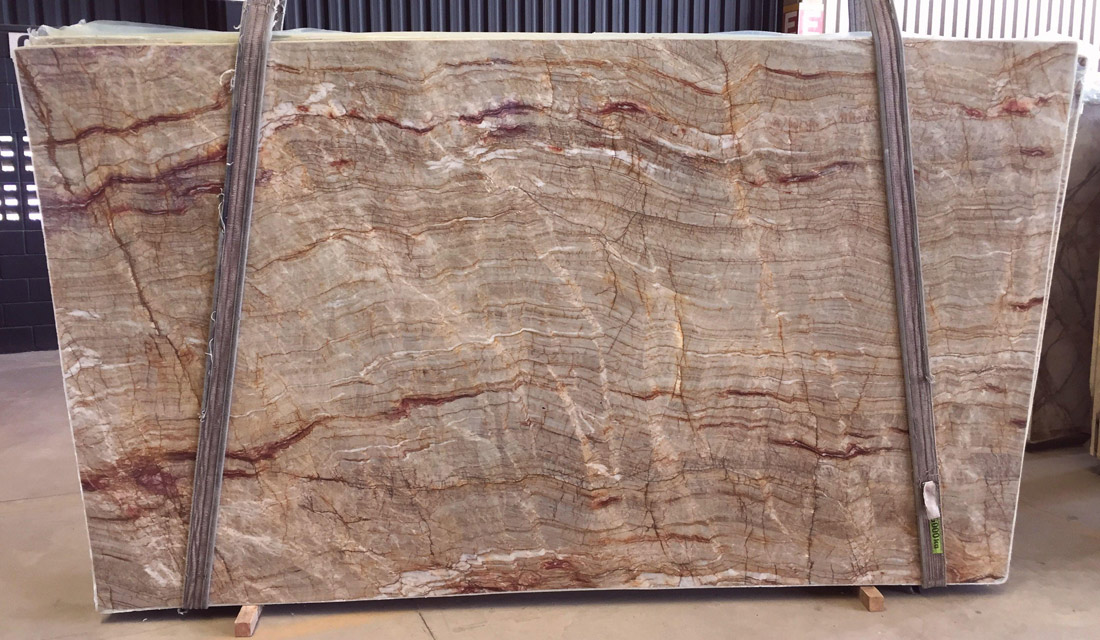
Nacarado — another warm Brazilian quartzite frequently compared with Taj Mahal. Should be presented to clients as a related or similar material rather than identical. Pattern can swing from cloudy and atmospheric to clearly linear, so block selection is doing most of the work here.
"Commercial names in natural stone vary by quarry owner, exporter, distributor and local market. Always verify the actual slab, batch and supplier documentation before purchasing."
Price Guide
Taj Mahal is a premium natural stone. Price depends on quarry source, slab quality, thickness, background colour, vein movement, availability, transportation and fabrication difficulty.
Installed countertop price in North America typically runs USD $100–$150 / sq ft. High-end installed projects with premium slabs or complex fabrication reach USD $150–$250 / sq ft — roughly USD $1,076–$2,691 / m² as an installed retail reference. Factory, wholesale and export prices differ significantly based on quantity, grade, thickness, shipping and currency.
What Makes Some Slabs More Expensive
Clean, warm, uniform creamy background; balanced golden-brown movement rather than broken or overly dark veins; low crack rate and stronger slab structure; batch consistency across multiple slabs for large projects; bookmatch potential for waterfall islands and feature walls; and global demand pressure on premium batches.
Professional Slab Inspection
1. Inspect the whole bundle — full slab photos, bundle photos, slab numbers, front and back images, and videos under natural light.
2. Check colour consistency — compare all slabs side by side, especially for island tops, wall panels and bookmatched designs.
3. Distinguish veins from cracks — hand touch, fingernail test, side lighting and back-side inspection to identify open fissures.
4. Review resin and mesh backing — resin is common, but heavy repairs, dark glue lines and unstable repaired areas warrant caution.
5. Check surface polish — cloudy spots, uneven reflection, orange peel texture, resin marks and dull repaired zones.
6. Test water absorption — if water quickly darkens the stone, proper sealing is required before use.
7. Confirm true quartzite performance — for important projects, use sample scratch tests, acid reaction tests or laboratory testing.
8. Avoid weak areas near cutouts — do not place sink holes, cooktop cutouts or unsupported spans across heavily repaired zones.
Best Applications
Kitchen countertops and islands, waterfall island panels, bathroom vanities, shower walls, feature walls, fireplace surrounds, bar counters, reception desks, and hotel and villa interiors.
Taj Mahal — Live StoneWhite Inventory
StoneWhite Intel Desk
Tracks block prices, quarry availability, lead times and freight rates across the major natural stone trade lanes. Publishes weekly internal briefings to the sourcing team.